How Kamari Turned a Backyard RV into $3,000/Month Airbnb Profit (2026 Case Study)
Kamari spent $50,000 to place a luxury RV in her Florida backyard and now earns $3,000/month. Plus, she transformed a destroyed Puerto Rico warehouse into a $2,000/month Airbnb for just $25,000. Learn her house hacking secrets.
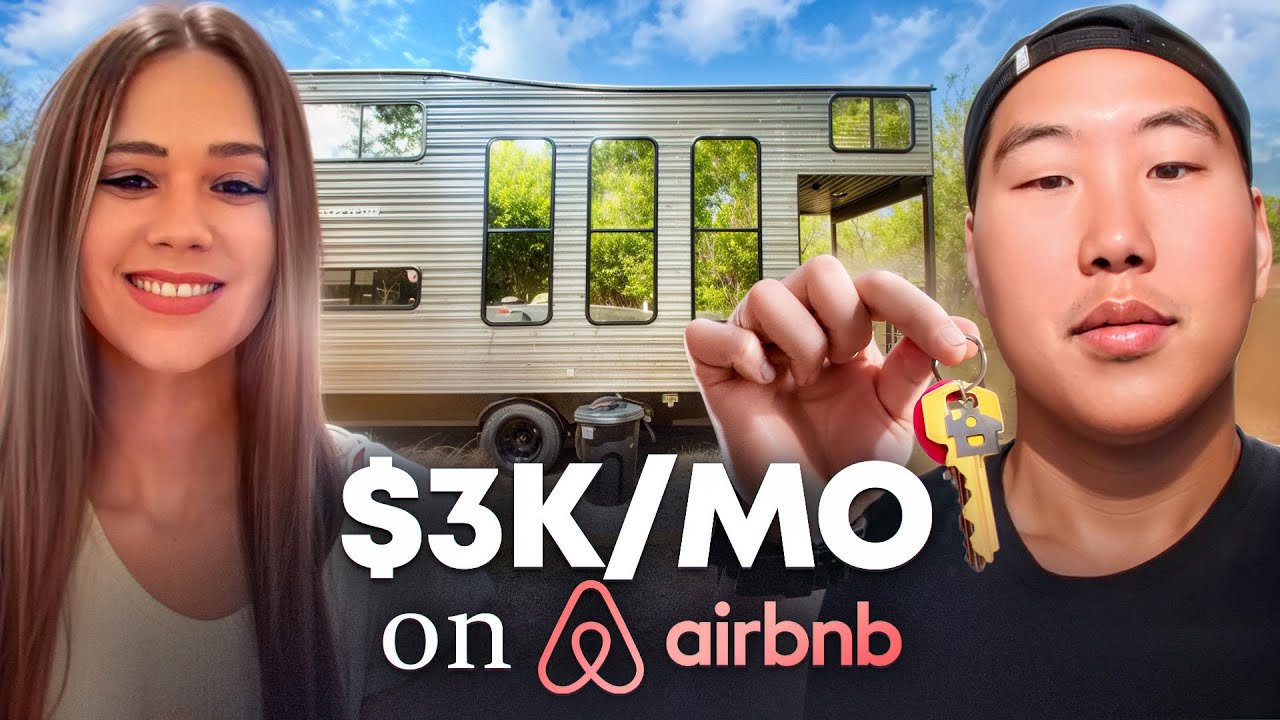
Kamari earns $5,000 per month from two Airbnb properties: a $3,000/month luxury RV in her Florida backyard and a $2,000/month converted warehouse in Puerto Rico. Starting with house hacking seven years ago in Puerto Rico, she built a real estate portfolio of four units while surviving Hurricane Maria, relocating to Florida, and transitioning to full-time real estate. Today, Kamari manages everything in just 2 hours per week after firing her property management company.
This case study breaks down exactly how Kamari created income-producing assets from unconventional sources, including her specific strategies for backyard Airbnbs, warehouse conversions, and maximizing revenue through events and film productions during slow seasons.
In this article:
Quick Results: Kamari's Airbnb Numbers
| Metric | Value | Context |
|---|---|---|
| Monthly Cash Flow | $5,000 | Combined from 2 properties |
| Florida RV Profit | $2,000-$3,000/month | Backyard luxury RV |
| Puerto Rico Profit | $2,000/month | Converted warehouse |
| Total Units Owned | 4 | 2 short-term rentals active |
| RV Setup Investment | $50,000 | RV purchase + site preparation |
| Warehouse Renovation | $25,000 | Complete rebuild from destroyed state |
| Weekly Management Time | 2 hours | After optimizing systems |
| Experience | 7 years | House hacking since Puerto Rico |
Kamari's Background: From Entertainment to Real Estate
You don't need a traditional business background to build a successful Airbnb portfolio. Kamari's path from entertainment industry professional to full-time real estate investor demonstrates how diverse skills can translate into rental success.
The Entertainment Career
Kamari studied entertainment business and law in college, adding recording arts to become an audio engineer. Her career path took her through internships at Warner Chapel Music before pursuing acting and singing professionally. This entertainment background gave her skills in presentation, negotiation, and understanding what creates memorable experiences—all directly applicable to creating standout Airbnb listings.
Her education in entertainment business and law provided an unexpected foundation for real estate. Understanding contracts, negotiations, and business operations from the music industry translated directly to lease negotiations, property management agreements, and structuring deals with landlords.
Hurricane Maria's Impact
In 2017, Hurricane Maria devastated Puerto Rico. Kamari had opened a business that wasn't a basic necessity, and with the island without power for months—some areas for an entire year—the business couldn't survive. This forced a pivotal decision that would redirect her entire career.
After enduring a year post-hurricane, Kamari and her family relocated to Florida. She took a W-2 job in e-commerce while running her Amazon business on the side. But the Puerto Rico experience had taught her something valuable: the importance of creating assets that generate income regardless of her physical presence or employment status.
"I started house hacking seven years ago while I lived in Puerto Rico, and that's pretty much what I've been doing ever since."
Seven Years of House Hacking
Kamari's real estate journey began when her mother found a business for sale in Puerto Rico that included both the business operations and the building itself. The building was completely destroyed—essentially a warehouse shell—but her mother saw potential and suggested they buy it together.
They condensed the business to the first floor and converted the second story into Kamari's apartment, creating a two-story living space above the business. This was her introduction to house hacking: living where you work or earning income from where you live.
The pattern repeated with each property purchase. When she opened a second business, instead of renting expensive separate space, she moved it into her apartment space and purchased a house. That house had the perfect layout to close off one small wall, creating a three-story house and a separate apartment for rental income.
Key Takeaway: Every time Kamari purchased a home, she evaluated the layout for mother-in-law suite potential or conversion opportunities. This systematic approach to property selection enabled consistent portfolio growth.
The Airbnb Journey: From Puerto Rico to Florida
2017: Transforming a Destroyed Warehouse
Situation: A destroyed warehouse with no floors and demolished walls became a $2,000/month Airbnb.
The building Kamari and her mother purchased was in terrible condition. There were no floors, walls were destroyed, and it functioned essentially as an empty warehouse. Most people would have seen an overwhelming renovation project. Kamari saw opportunity.
The transformation was ambitious: they created a two-story apartment within the shell of the destroyed building. Kamari designed open spaces with glass walls for the rooms because she didn't like feeling closed in. The unconventional design choices resulted in a unique property that stands out in the Puerto Rico rental market.
Renovation Investment: Approximately $25,000—remarkably affordable because her husband handled much of the construction work himself. This DIY approach dramatically reduced costs while allowing complete design control.
When Kamari moved to Florida after Hurricane Maria, the Puerto Rico property transitioned from her residence to a full-time Airbnb, now generating approximately $2,000 per month in profit.
"These walls were destroyed. There were no floors. It was basically like a warehouse. So we just turned it into this... and I didn't like to be closed up so we made all the rooms with glass walls."
2024: The Backyard RV Innovation
Situation: New Florida home with spare land and no HOA becomes platform for luxury RV Airbnb.
When Kamari purchased her new Florida home, she immediately noticed the property's potential. The land had a wooded section that felt secluded despite being centrally located—perfect for a tiny home or RV rental. Critically, there was no HOA to restrict what she could do with the property.
The decision to use an RV rather than building a tiny home came down to practical considerations. Building would take significant time and cost the same or more than purchasing an RV. Plus, an RV offers flexibility—if they ever want to take it out for personal use, they can. A traditional tiny home build would be permanent.
Total Investment: $50,000 for the RV purchase and site preparation.
Amenities Added:
Hot tub (doubles as a cool pool in warm Florida weather)
Bikes for guests to use on nearby trails at a former golf course
Grill for outdoor cooking
Secluded wooded setting that creates a retreat atmosphere
The location drives the amenity selection. The secluded, wooded setting inspired outdoor-focused amenities. The proximity to a former golf course with trails made bikes a logical addition. The hot tub serves double duty—heated in cooler months, used as a small pool when Florida heat makes heating unnecessary.
Monthly Profit: $2,000-$3,000, representing a strong return on the $50,000 investment with ROI achieved within 18-25 months.
How to Choose Properties for House Hacking
Kamari's property selection strategy focuses on identifying hidden rental potential in every purchase. Her approach combines personal living needs with investment criteria, ensuring each property serves dual purposes.
The Mother-in-Law Suite Filter
Every time Kamari purchases a home, she evaluates the layout for conversion potential. The key questions she asks:
Does it have an existing mother-in-law suite?
Can one wall addition create a separate unit?
Is there spare land for an ADU, tiny home, or RV?
Are there HOA restrictions that would prevent rentals?
This systematic evaluation has allowed her to build a four-unit portfolio while living in each property she purchased. She's never bought a property solely as an investment—each one served as her primary residence first.
The No-HOA Requirement
For the Florida RV property, the absence of an HOA was essential. HOAs commonly restrict accessory dwelling units, tiny homes, and definitely RVs as rental properties. Kamari specifically sought properties without these restrictions, opening possibilities that most buyers wouldn't even consider.
Undervalued Property Recognition
Both major properties in Kamari's portfolio were undervalued because of their condition or unconventional nature:
Puerto Rico warehouse: Destroyed building that most buyers would avoid
Florida backyard: Wooded section of property that most buyers would see as maintenance burden
Where others saw problems, Kamari saw income potential. This mindset shift is crucial for finding deals in competitive markets.
Airbnb Strategies That Actually Work: Kamari's Playbook
The difference between maximizing and underutilizing a property comes down to creative thinking. Kamari attributes her success to three core strategies that most hosts never consider.
Strategy 1: Multi-Platform Revenue Diversification
What it is: Listing properties on multiple platforms and using every available revenue stream, not just Airbnb.
Why it works: Different platforms attract different guest types, and seasonal fluctuations affect platforms differently. By diversifying, Kamari ensures consistent bookings year-round regardless of what happens on any single platform.
When Kamari ventured into arbitrage in Mexico, she needed to list on booking.com in addition to Airbnb because international travelers often prefer booking.com. This required using Guesty for Host to sync calendars and prevent double bookings.
The lesson applies broadly: don't limit yourself to one platform. Vrbo, booking.com, direct bookings, and Airbnb each have their audiences. A diversified approach reduces dependency on any single platform's algorithm or policy changes.
"I think you need to use every platform available because there are good seasons, bad seasons, and so I just incorporate different platforms."
Strategy 2: Event Space Monetization
What it is: Renting properties for events, film productions, and other uses when not booked for overnight stays.
Why it works: Properties sit empty during gaps between bookings. Event rentals, film productions, and daytime uses create income from otherwise unproductive time. Even if you're living in the property, you can rent outdoor spaces while remaining inside.
Kamari noticed her friends constantly asked to use her backyard and pool for parties—always for free. The demand was obvious; she just needed to monetize it. Now she lists on event platforms and accepts film production inquiries, generating additional revenue without affecting her Airbnb bookings.
The Florida property is particularly suited for this because of the pool, great backyard, and ability to host events in outdoor spaces while Kamari remains inside if she chooses.
"My friends were already asking for my backyard all the time so I'm like 'for free?' Maybe I should do something about this."
Kamari's Results with This Strategy:
Additional income during gaps between Airbnb bookings
Revenue from property assets (pool, backyard) that otherwise generate nothing
Ability to maintain personal use while still monetizing spaces
Strategy 3: Self-Management Excellence
What it is: Firing property management companies and implementing personal systems that deliver better results in less time.
Why it works: Property management companies often underperform because they're managing many properties with standardized approaches. Your property gets lost in their portfolio. Self-management with the right tools and trained cleaners delivers better reviews, higher revenue, and lower costs.
Kamari had a revealing experience: the only period in her entire Airbnb history when she failed to achieve Superhost status was when she used a property management company. Their standardized approach didn't match her property's needs or her guests' expectations. After dismissing them and training her own team with her systems, she immediately returned to Superhost status.
The time investment is minimal once systems are in place. Kamari estimates approximately 2 hours per week to manage multiple properties—far less than most people expect and far less than what a property management company charges.
"Unfortunately I had to dismiss them and go back to training my people with my system and then we went back to Superhost."
Kamari's Airbnb Results: The Numbers
Kamari generates $5,000/month combined from two properties while working approximately 2 hours per week. Here's the complete breakdown of her portfolio performance.
Property 1: Florida Backyard RV
| Metric | Value | Notes |
|---|---|---|
| Initial Investment | $50,000 | RV + site preparation |
| Monthly Profit | $2,000-$3,000 | Average monthly range |
| ROI Timeline | 18-25 months | Based on profit range |
| Key Amenities | Hot tub, bikes, grill | Outdoor-focused |
| Location Advantage | Secluded feel, central location | Best of both worlds |
Property 2: Puerto Rico Warehouse Conversion
| Metric | Value | Notes |
|---|---|---|
| Renovation Investment | ~$25,000 | Husband did much of the work |
| Monthly Profit | $2,000 | Consistent average |
| Property Type | Two-story apartment | Built within warehouse shell |
| Unique Features | Glass wall rooms | Open, airy design |
| Original Condition | Destroyed, no floors | Complete transformation |
Portfolio Performance Summary
| Metric | Value |
|---|---|
| Total Properties Owned | 4 units |
| Active Short-Term Rentals | 2 |
| Combined Monthly Cash Flow | $5,000 |
| Total Capital Invested | ~$75,000 |
| Weekly Management Time | 2 hours |
| Current Status | Full-time real estate + realtor |
Key Milestones Achieved
Transformed destroyed warehouse into profitable Airbnb for $25,000
Created backyard income stream generating $3,000/month
Achieved Superhost status after firing property management
Reduced management time to 2 hours weekly
Transitioned to full-time real estate career
Built 4-unit portfolio through consistent house hacking
Airbnb Lessons: What Kamari Learned
These five lessons took Kamari from first-time house hacker to $5,000/month in passive income. Each one came from real experience—including surviving Hurricane Maria—and could save you months of trial and error.
"You won't achieve anything just sitting on the sidelines... the more you wait, you're just postponing what your new life could be."
Lesson 1: Look for Hidden Potential in Every Property
The Mistake: Buying properties only for their obvious features without evaluating conversion or addition potential.
What Kamari Learned: Every property she purchased was evaluated for its hidden income potential. The destroyed warehouse became a two-story apartment. The wooded backyard became a luxury RV rental. The house with the right layout became a house plus apartment. This mindset transforms ordinary purchases into portfolio growth.
Why This Matters: Most buyers see a home and evaluate it for living. House hackers see a home and evaluate it for living plus earning. This fundamental shift in perspective is what separates those who build portfolios from those who just buy houses.
Lesson 2: Don't Over-Rely on Property Management Companies
The Mistake: Assuming property managers will care about your property as much as you do.
What Kamari Learned: The only time she lost Superhost status was when a property management company ran her properties. Their standardized approach couldn't match the personal touch and attention to detail that her own systems provided. After firing them and training her own team, she immediately recovered.
Why This Matters: Property managers handle many properties. Yours becomes one of many, losing the personal attention that earns five-star reviews. Self-management with good tools often delivers better results in less time than you'd expect.
Lesson 3: Diversify Your Income Streams
The Mistake: Relying solely on Airbnb nightly stays for income.
What Kamari Learned: Multiple platforms, event rentals, and film production bookings create income streams that smooth out seasonal fluctuations. When Airbnb is slow, events might be busy. When one platform underperforms, others might excel.
Why This Matters: Single-platform dependency is risky. Algorithm changes, policy updates, or seasonal shifts can devastate income overnight. Diversification provides stability.
Lesson 4: Leverage DIY Skills to Reduce Costs
The Mistake: Hiring contractors for everything and watching renovation budgets explode.
What Kamari Learned: Her husband's construction skills allowed them to renovate the Puerto Rico warehouse for approximately $25,000—a fraction of what contractors would have charged for such an extensive transformation. DIY capabilities dramatically improve project economics.
Why This Matters: Renovation costs make or break investment returns. Properties that need work are often undervalued precisely because most buyers can't or won't do the work themselves. If you can, you access deals others avoid.
Lesson 5: Take Action Rather Than Waiting for Perfect Conditions
The Mistake: Watching from the sidelines, waiting until everything feels perfect before starting.
What Kamari Learned: She followed Preston's content for a while before joining the program, analyzing carefully before committing. But she emphasizes that waiting too long just postpones your new life. The longer you sit on the sidelines, the more opportunities pass you by.
Why This Matters: Perfect conditions never arrive. Markets change, personal circumstances shift, and opportunities come and go. Those who succeed take action with imperfect information and adjust as they learn.
"I would say to go for it. I mean, you won't achieve anything just sitting on the sidelines."
Best Tools for Airbnb Management: Kamari's Tech Stack
Kamari manages multiple properties in 2 hours per week using these tools. Here's the technology that powers her efficient operation.
Essential Tools Overview
| Category | Tool | Purpose | Why Kamari Chose It |
|---|---|---|---|
| Dynamic Pricing | Price Labs | Automated rate optimization | Primary tool for pricing all properties |
| Channel Management | Guesty for Host | Multi-platform sync | Used for Mexico arbitrage on booking.com |
| Market Research | AirDNA | Data-driven decisions | Used for international market analysis |
Price Labs: Dynamic Pricing That Works
What it does: Automatically adjusts pricing based on demand, events, seasonality, and market conditions.
How Kamari uses it: Price Labs is her primary pricing tool across all properties. It handles the daily price adjustments that would otherwise consume hours of manual work, optimizing rates to maximize revenue without constant attention.
Pro tip: Set your base prices conservatively and let Price Labs adjust upward during high-demand periods rather than pricing high and hoping for bookings.
Guesty for Host: Multi-Platform Management
What it does: Syncs calendars across Airbnb, Vrbo, booking.com and other platforms to prevent double bookings. Also provides unified messaging and booking management.
How Kamari uses it: When she ran arbitrage in Mexico and needed bookings from booking.com (popular with international travelers), Guesty prevented scheduling conflicts across platforms. Essential for any multi-platform strategy.
Pro tip: Even if you're only on Airbnb now, set up Guesty before adding platforms—it's easier than migrating later.
Personal Touch Over Full Automation
Despite having automation tools, Kamari maintains personal involvement in guest communication. She doesn't rely entirely on automated messages, preferring to send messages herself. This personal touch contributes to her consistent Superhost status.
"I don't rely too much on automated messages. I actually like to send them myself."
Kamari's Advice for Airbnb Beginners
"Go for it. You won't achieve anything just sitting on the sidelines."
If Kamari were advising someone starting today, here's her guidance:
Step 1: Do Your Due Diligence, Then Commit
Kamari followed Preston's content for a while before joining the program. She wanted to make sure she was investing in the right person and approach. But she emphasizes that this research phase should have an end point—eventually, you need to commit and take action.
She was approached by multiple profiles impersonating Preston (a common scam in the industry), so she carefully analyzed everything before joining. Attending free seminars and seeing the value provided for free convinced her that paid content would deliver even more.
Step 2: Look for Opportunity in Your Current Situation
Kamari's entire portfolio was built through house hacking—finding income potential in properties she was already buying to live in. You don't need to start with a dedicated investment property. Your current home, your next home, or even your backyard might have untapped potential.
Questions to ask about your current situation:
Does your property have a convertible basement, garage, or spare room?
Is there unused land that could support an ADU or RV?
Could you rent your backyard or pool for events?
Is your next home purchase an opportunity to house hack?
Step 3: Start Small and Scale with Systems
Kamari now manages properties in 2 hours per week, but that efficiency came from years of developing systems. Start with what you can handle personally, build systems as you learn what works, then scale.
Her progression:
Step 4: Be Open to Helping Others
Kamari has proposals to manage other people's properties and is open to consulting work. Her expertise, developed through personal experience, has value beyond her own portfolio. As you build skills, opportunities to help others—and earn from that expertise—will emerge.
"Whoever has any ideas or even wants some advice or suggestions, I'm here."
Watch Kamari's Full Interview
Video highlights:
0:00 - Introduction and portfolio overview
3:30 - Kamari's entertainment industry background
7:15 - Hurricane Maria and relocation to Florida
10:30 - The backyard RV concept and setup
15:45 - Puerto Rico warehouse transformation tour
18:20 - Property management lessons learned
21:00 - Tools and systems for efficient management
24:00 - Advice for beginners
Frequently Asked Questions
How much does it cost to start a backyard Airbnb?
Kamari invested $50,000 total for her Florida backyard RV Airbnb, which includes purchasing the RV and preparing the site. This investment generates $2,000-$3,000 per month, providing full ROI within 18-25 months. Costs vary significantly based on whether you build a structure, convert an existing space, or place a mobile unit like an RV.
The key factors affecting startup costs:
Unit type: RVs are often cheaper and faster than building
Site preparation: Utilities, leveling, landscaping
Amenities: Hot tubs, outdoor features add cost but increase revenue
Permits: Vary dramatically by location
Can you really put an RV in your backyard and rent it on Airbnb?
Yes, but location matters enormously. Kamari succeeded because her Florida property has no HOA restrictions and adequate land with a wooded, secluded feel. The key requirements are: no HOA prohibitions, adequate space, utility connections (or self-contained RV), and local regulations that permit short-term rentals.
Many municipalities and HOAs prohibit RV parking or short-term rentals. Research local rules before investing.
What's the biggest risk with backyard Airbnbs?
The primary risks Kamari has navigated include:
Regulatory changes: Cities increasingly regulate short-term rentals. What's legal today might face restrictions tomorrow.
Property management quality: Kamari's worst performance period was when she used a property management company. Their standardized approach didn't maintain her Superhost status.
Natural disasters: Hurricane Maria forced Kamari to relocate entirely. Building resilience through diversification (multiple properties, multiple platforms) helps manage catastrophic risks.
Start Your Airbnb Journey
Ready to build your own Airbnb business like Kamari?
Learn more about Legacy Investing Show
Related Success Stories
Helpful Resources
About Legacy Investing Show
Legacy Investing Show is Preston Seo's comprehensive Airbnb arbitrage training program. Since founding, the program has:
Trained 2,000+ students across the United States
Generated $10M+ in cumulative student revenue
Built an active community of short-term rental investors
Produced numerous students earning $10K+/month
Preston Seo built a $15 million real estate portfolio generating over $400,000 yearly in net profit from his Airbnbs. He created Legacy Investing Show to teach the exact systems that scaled his business.
blog resources | Watch free training
This case study is based on Kamari's video interview conducted in 2024. All statistics and quotes are directly from Kamari's experience. Individual results vary based on market, effort, and capital invested.
Last updated: February 10, 2026
Preston Seo
Real estate investor and financial educator helping people build generational wealth through smart investing strategies.
Sources to check before you act
Check primary guidance and your own records before you treat any page as a final answer.
- Current IRS forms, instructions, and publications for the relevant tax year
- Your actual account statements, payroll reports, entity records, and advisor memos
Educational only. Results vary. Tax, legal, and investment decisions should be reviewed with a qualified professional who can see your full situation.
Frequently asked questions
How much does it cost to start a backyard Airbnb?
Kamari invested approximately $50,000 total to set up her backyard RV Airbnb in Florida, which includes buying the RV and preparing the space. This investment generates $2,000-$3,000 per month in profit, providing an ROI within 18-25 months.
Can you put an RV in your backyard and rent it on Airbnb?
Yes, but you need land with no HOA restrictions. Kamari purchased a home with spare land and no HOA, allowing her to place a luxury RV in a wooded section of her backyard. The secluded, wooded setting makes it feel like a private retreat while being centrally located.
Is a tiny home Airbnb profitable?
Yes. Kamari's RV generates $2,000-$3,000/month in profit. Tiny homes and RVs tap into the growing demand for unique, affordable accommodations. The key advantages are lower setup costs compared to traditional properties and the ability to add them to existing land you own.
How can you make money from your backyard?
Kamari uses multiple strategies: placing a luxury RV for short-term rental ($3,000/month), renting her pool and backyard for events when she doesn't have Airbnb guests, and using the space for film productions. She maximizes every asset available to generate income.
How long does it take to manage Airbnb properties?
Kamari manages multiple properties in approximately 2 hours per week using automation tools like Price Labs for dynamic pricing. She fired her property management company and now achieves better results with less time investment by training her own cleaning team.
Can you turn a destroyed building into an Airbnb?
Yes. Kamari transformed a completely destroyed warehouse in Puerto Rico into a two-story Airbnb apartment for approximately $25,000 in renovation costs. The property now generates $2,000/month in profit. Her husband's construction skills helped reduce costs significantly.
What is house hacking with Airbnb?
House hacking means living in a property while renting out part of it to offset your mortgage. Kamari has been house hacking for 7 years, purchasing homes with mother-in-law suites or layouts that allow her to add rental units while living on the property.
What amenities should a backyard Airbnb have?
Kamari's backyard RV includes a hot tub (doubles as a pool in warm weather), bikes for nearby trails at a former golf course, and a grill. She chose amenities that match the secluded, wooded location and encourage outdoor activities.
Is Legacy Investing Show worth it for beginners?
Kamari followed Preston's content for a while before joining, noting that he provided so much valuable information for free that she knew the paid program would deliver even more value. She advises not sitting on the sidelines and postponing your new life.
How do you make money during Airbnb slow seasons?
Kamari uses her properties for events and film productions when she doesn't have Airbnb guests. She also lists on multiple platforms including event rental sites. Her friends constantly asked to use her pool and backyard for free, so she monetized that demand.